
How to translate legal documents correctly
A practical checklist for translating legal documents with fewer risks, including review steps, terminology consistency, and when machine translation is not enough.
Published 2026-04-16 · 7 min read
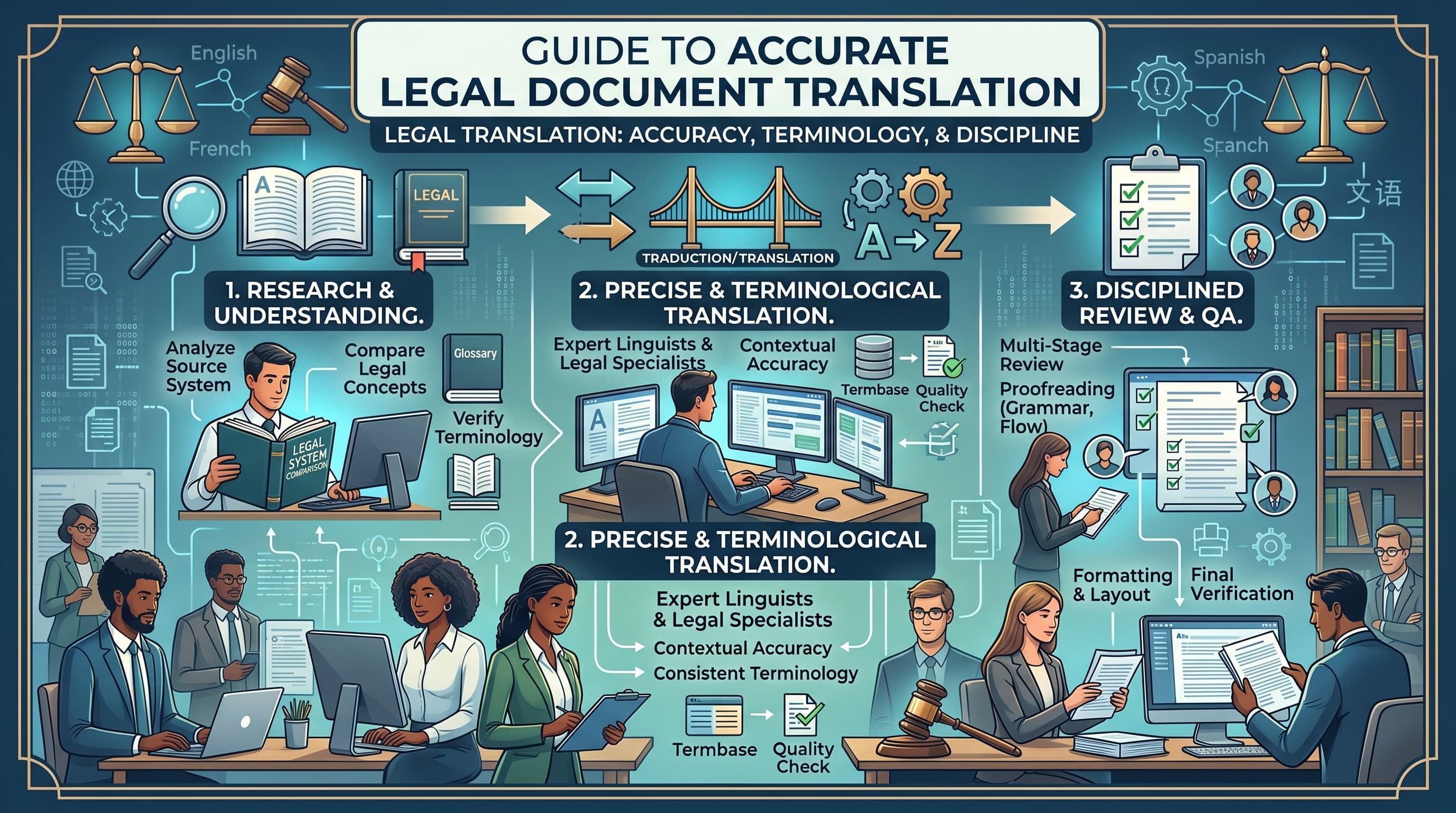
Legal translation is not just about changing words into another language. Accuracy, terminology, and review discipline matter far more than speed alone.
Treat legal translation as a risk problem
Legal documents carry obligations, definitions, dates, and jurisdiction-specific language. A translation error can change the meaning of a clause or create confusion later, so the goal is not just readability. The goal is controlled accuracy.
Machine translation can help with speed, but important legal files still need careful human review before anyone signs, files, or relies on them.
Use a repeatable review workflow
Start with the cleanest source file possible. Translate from the final approved version, not an older draft. Keep the original and translated versions side by side so reviewers can compare definitions, parties, dates, and numbered clauses.
- Confirm names of parties, entities, and addresses.
- Check dates, currency amounts, and clause numbering.
- Keep repeated defined terms consistent across the full file.
- Flag anything jurisdiction-specific for expert review.
Watch the highest-risk sections first
Certain sections deserve extra scrutiny: definitions, indemnities, termination clauses, liability caps, governing law, payment terms, and signature blocks. These are the sections most likely to create expensive misunderstandings if translated loosely.
If the document will be submitted to a court, regulator, or government office, verify whether certified or sworn translation is required. A normal machine-assisted translation may not be accepted even if the wording looks accurate.
When machine translation is useful
Machine translation is useful for first-pass understanding, internal review, multilingual drafting support, and speeding up non-certified legal workflows. It is not a substitute for legal judgment.
A practical pattern is machine-first, human-review-second: translate quickly, then have a qualified reviewer check the final wording before it is shared externally.