
Free vs paid translation tools
A clear comparison of free and paid translation tools, when each one is enough, and when paying saves more time than it costs.
Published 2026-04-16 · 5 min read
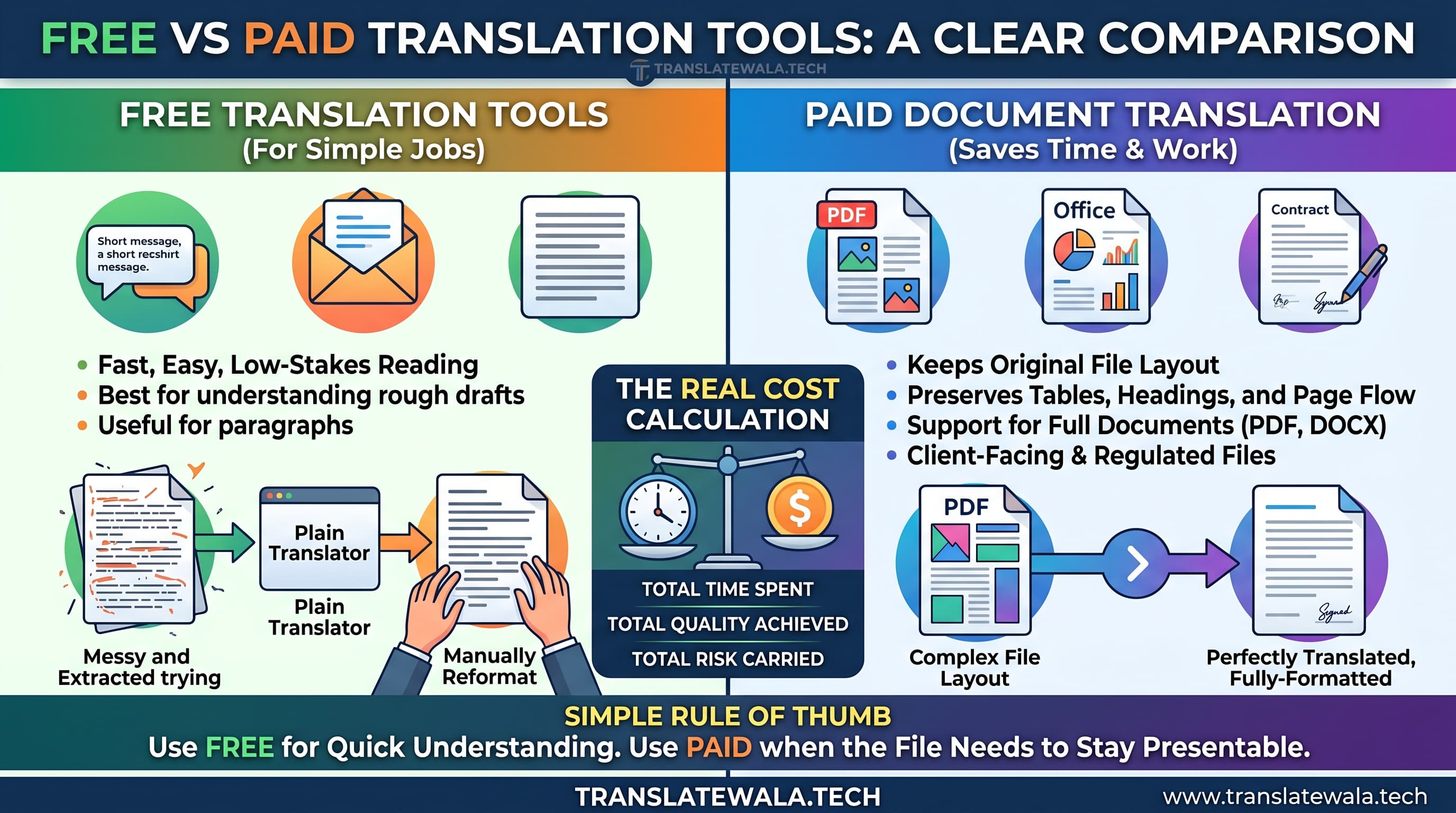
Free translation tools are useful, but they are not always the cheapest option once formatting, review time, and business risk are included.
Free tools are good for simple jobs
If you need to understand a short message, a paragraph, or a rough draft, free translation tools are excellent. They are fast, easy, and often accurate enough for low-stakes reading.
The problem starts when the job is not just text. Full documents introduce layout, tables, pagination, downloads, and collaboration steps that free tools do not always handle well.
Where paid tools earn their keep
Paid document translators usually justify the cost by saving manual work. If the output keeps the structure of the original file, your team spends less time cleaning up columns, headings, or page flow after translation.
- Clear pricing before translation starts.
- Support for PDFs and Office files, not just pasted text.
- Downloadable files instead of copied paragraphs.
- Better fit for invoices, presentations, reports, and contracts.
Calculate the real cost
A free tool that forces 45 minutes of manual cleanup may cost more than a paid tool that gives you a usable file in one run. The same is true if an employee has to reformat slides or rebuild tables after every translation.
The best comparison is not free versus paid in theory. It is total time spent, total quality achieved, and total risk carried after the translation is done.
Simple rule of thumb
Use free tools for quick understanding. Use paid document translation when the file needs to stay presentable, traceable, and ready to send.
If the file is client-facing, regulated, or layout-heavy, paying for the right workflow is usually the cheaper decision overall.